Clinical Laboratories
CLIA, CAP, and ISO 15189 quality programs purpose-built for clinical, anatomic path, and molecular laboratories.
The Lab Runs on Heroics: One Coordinator, Forty Spreadsheets, and a CAP Checklist.
Clinical labs carry the densest inspection burden in healthcare — CAP checklists, CLIA surveys, and often ISO 15189 — on quality infrastructure built from spreadsheets and paper logs maintained by one heroic quality coordinator. QC review happens in batches. Competency slides. Reagent lots change hands without a record.
Every two years, the inspection sprint: weeks of reconciliation to make the paper agree with reality. The finding rate tracks the sprint, not the lab.
What CLIA, CAP, and ISO 15189 Require From Laboratory Quality
CLIA 493 requires control procedures that detect immediate error, documented competency on the six elements, and a director responsible for it all. CAP checklists demand evidence at line-item level: reagent lot qualification, maintenance at frequency, QC review with corrective action. ISO 15189 adds the management system: risk-based QC planning, document control, and continual improvement with records.
Kintavo runs the set as one system: rules at QC entry, competency cycles that schedule themselves, lots that quarantine until qualified — and the checklist evidence is the daily work, not a reconstruction.
The Whole CAP Checklist, Running as Daily Work.
CAP announces. The quality coordinator does not cancel her vacation. The inspector samples: a reagent lot (quarantine-to-release record, one click), a tech’s competency file (six elements, current cycle, ten seconds), Tuesday’s QC failure (corrective record with repeats and signed release). Three findings last cycle; zero this cycle. The difference is not effort — it is where the evidence lives.
Pick Any Checklist Item. The Evidence Is the Work Itself.
Lot qualification, QC corrective action, competency records, maintenance at frequency — each exists because the workflow created it, signed, at the moment it happened. CAP inspection prep becomes a walkthrough.
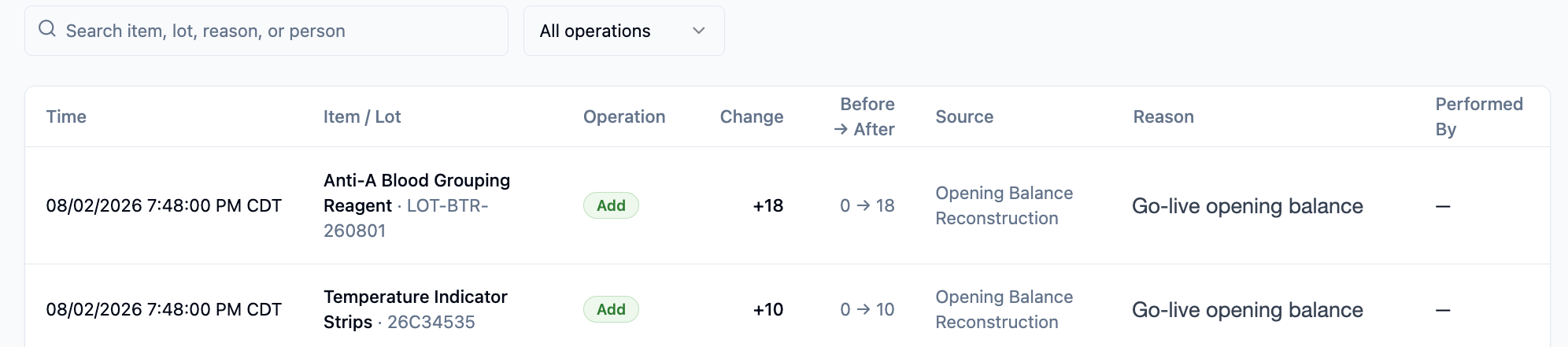
Configured for your rules from day one.
"Kintavo has been very responsive to our needs, enabling us to develop and customize reagent and blood QC apps quickly, ultimately supporting top-notch quality care for our patients."