Supplier Quality
Qualify, monitor, and audit vendors in one place.
Scorecards, requalification schedules, and supplier CAPAs — with every certificate and agreement filed against the vendor record.
Your Quality System Extends to Every Supplier on the PO — Whether You Manage Them or Not.
The approved supplier list is a spreadsheet last certified during the ISO audit. Certificates expire silently. A purchasing agent orders from a supplier whose qualification lapsed a year ago — and nothing stops the PO, because nothing is connected to it.
When a supplier-caused deviation lands, the file tells you nothing: no trend, no scorecard, no record of the last audit. The regulator holds you responsible for your suppliers; a spreadsheet cannot carry that weight.
What Part 820.50, ISO 13485, and ICH Q10 Require From Supplier Controls
Part 820.50 requires suppliers to be evaluated and selected on their ability to meet requirements, with the evaluation documented and controls proportionate to risk. ISO 13485 clause 7.4 requires monitoring of supplier performance and re-evaluation. ICH Q10 and EU GMP chapter 7 extend the same discipline to outsourced activities — with quality agreements and periodic review.
A certified spreadsheet meets the requirement on audit day and drifts every day after. Kintavo keeps qualification, performance, and requalification connected to the transactions they govern — so the approved list is enforced, not just published.
The old way, retired.
This is the actual screen.
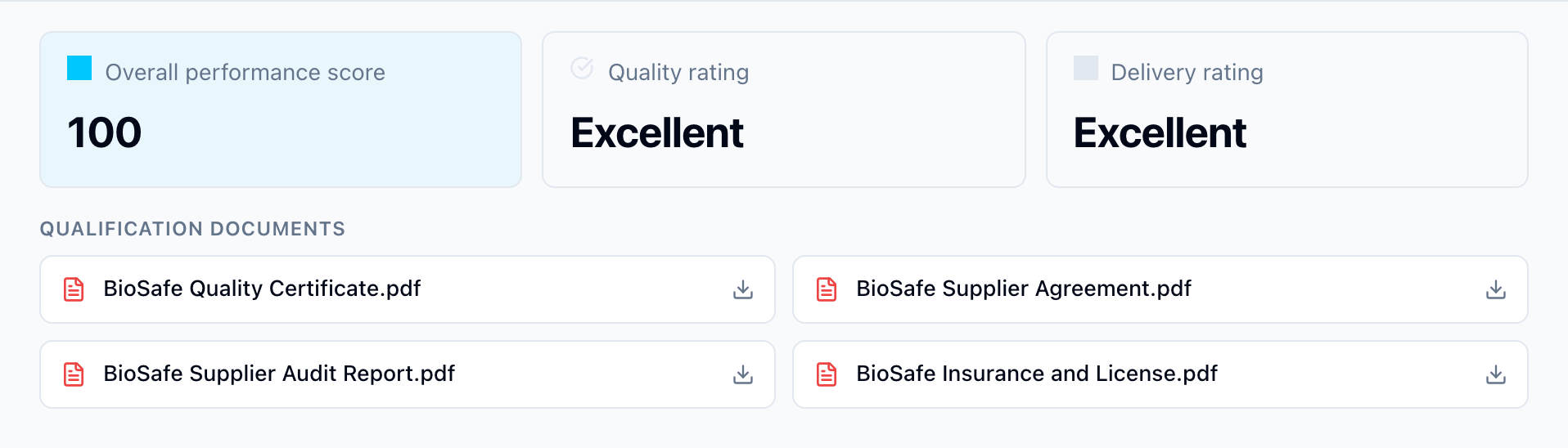
Qualified. Monitored. Requalified. Enforced.
A reagent distributor’s ISO certificate expires. Kintavo escalates at sixty days, thirty, and at lapse — when the supplier drops to conditional and receiving flags every incoming order for quality review. The scorecard shows why nobody argues: two deviations this quarter, both packaging-related. The requalification lands as a documented decision: retained, with a corrective commitment and a six-month review.
Part of one connected system.
Supplier Quality shares the same data model, AI engine, and audit trail as the other eighteen modules — so its records see, and are seen by, everything else in your quality system.
Supplier Quality FAQ
Can Kintavo block purchases from unapproved suppliers?
Yes — receiving and purchasing workflows check the approved supplier list in real time. A lapsed or conditional supplier stops or flags the transaction per your rules.
Where does supplier performance data come from?
From records your team already creates: receiving inspections, deviations attributed to suppliers, and audit findings. The scorecard compiles itself.
Does Kintavo handle quality agreements?
Yes — agreements live on the supplier record with effective dates, renewal escalation, and signature tracking.
Can supplier audits use our checklists?
Yes. Supplier audits run on the same checklist and findings-to-closure engine as internal audits, scheduled by risk class.