CAPA Management
Root cause found. Corrective action closed. Verified.
Structured root-cause analysis, effectiveness checks, and closure verification — with AI flagging similar past events so you fix systemic issues once.
CAPA Is the Most-Cited Subsystem in FDA Inspections. Every Year.
CAPA fails in predictable ways: root cause written as a restatement of the problem, corrective actions that are really corrections, effectiveness checks signed the day the action closed, and a spreadsheet aging column that quietly reaches 400 days. Inspectors know these patterns — 820.100 findings top the 483 list year after year.
The organizational cost is worse than the citation: a CAPA system nobody trusts becomes a formality, and the same failures recur with new record numbers.
What Part 820.100, ISO 13485, and Part 211 Require From CAPA
Part 820.100 requires analysis of quality data sources to identify existing and potential causes, investigation, action to correct and prevent recurrence, verification or validation of effectiveness, and dissemination to those responsible. ISO 13485 clauses 8.5.2 and 8.5.3 split corrective and preventive action with the same discipline. Part 211.192 demands the investigation rigor pharma inspectors expect behind every CAPA.
A tracking spreadsheet demonstrates the opposite of a system. Kintavo runs the sequence as a workflow — investigation before action, action before verification, verification before closure — with the timeline enforced and every phase signed.
The old way, retired.
This is the actual screen.
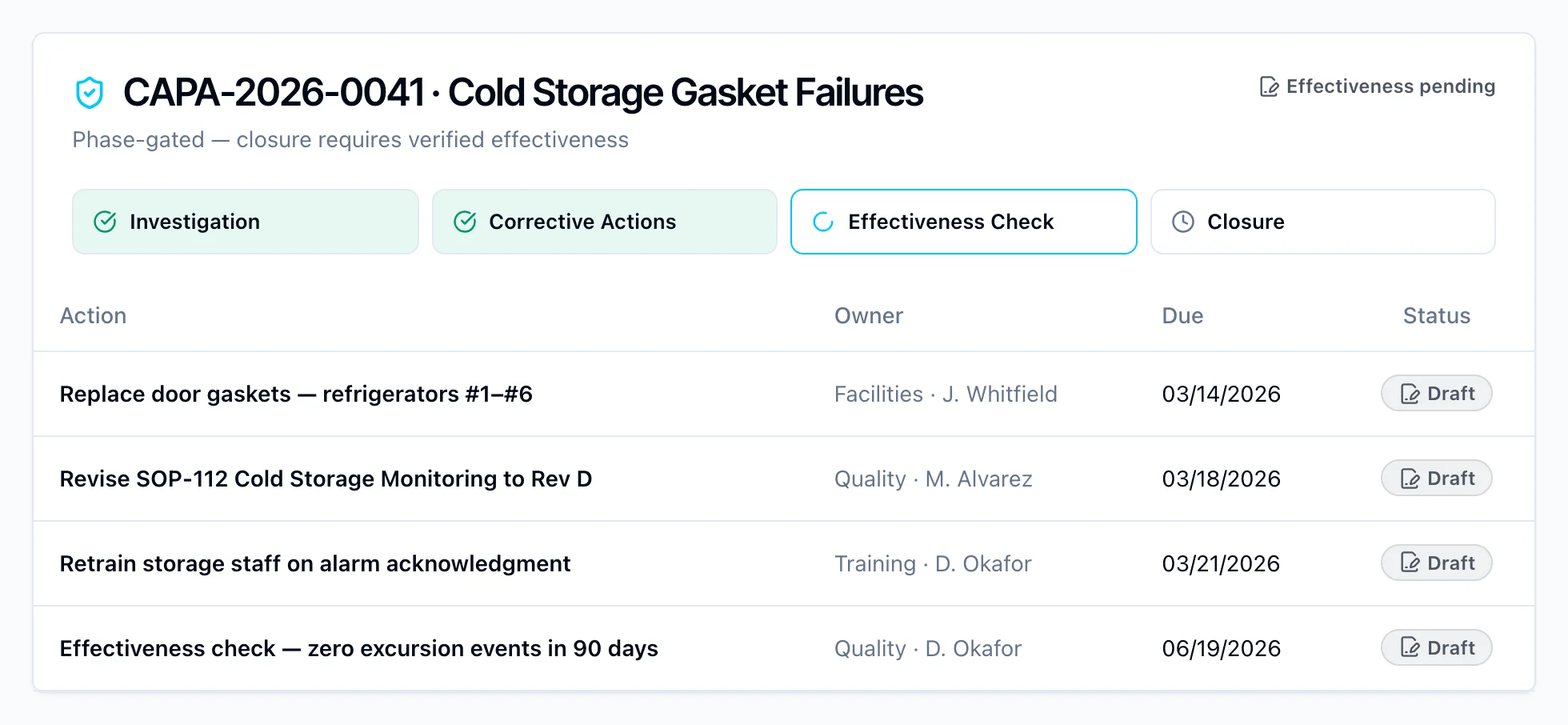
Investigation First. Closure Last. Nothing Skipped.
Three specimen-labeling deviations in a quarter trip the recurrence rule and open a CAPA. The 5 Whys lands on a look-alike label stock issue, with photos attached. Corrective action replaces the stock and revises the receiving SOP; preventive action adds a label check to the receiving workflow. Ninety days later, the effectiveness check runs the deviation query: zero recurrences. The quality manager signs closure with the data in front of her.
Part of one connected system.
CAPA Management shares the same data model, AI engine, and audit trail as the other eighteen modules — so its records see, and are seen by, everything else in your quality system.
CAPA Management FAQ
How does Kintavo prevent weak root cause analysis?
Structure. The RCA method is a guided workflow — 5 Whys, fishbone, or your own — requiring evidence at each step, and the investigation must be signed before actions can open.
What gates CAPA closure?
Effectiveness verification: defined criteria, a defined interval, and data meeting them. A CAPA cannot close on the same day its action completes.
Can deviations and complaints escalate to CAPA automatically?
Yes — severity and recurrence rules you configure open a linked CAPA carrying the full source history. The 820.100(a) data analysis happens continuously, not annually.
Does Kintavo distinguish corrections from corrective actions?
Yes, explicitly — immediate corrections are recorded on the source event; corrective and preventive actions live on the CAPA with their own verification. Inspectors check for exactly this distinction.