Medical Devices
ISO 13485 and 21 CFR Part 820 out of the box — with design controls, DHF management, and post-market surveillance.
Device Quality Fails at the Seams — Between Design, Production, and Post-Market.
The DHF lives in one system, complaints in another, CAPA in a spreadsheet, and risk in a document last touched at design transfer. Each is individually defensible; the seams between them are where audits go wrong — the complaint trend that never reached the risk file, the design change that never triggered a DHF update.
With FDA’s QMSR aligning Part 820 to ISO 13485, the frameworks now agree on the point: quality is one system, and the linkage is the requirement.
What ISO 13485, the QMSR, and EU MDR Require From Device Quality
ISO 13485 requires documented, linked processes: design controls (7.3), purchasing controls (7.4), nonconformance (8.3), and CAPA (8.5) feeding management review (5.6). The QMSR incorporates the standard into US law. EU MDR adds post-market surveillance with defined inputs and a PMS report auditors actually read. ISO 14971 requires the risk file to stay live against production and post-market data.
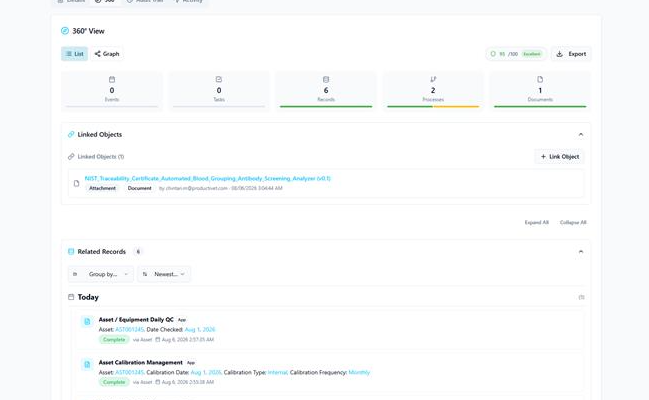
Kintavo is that linkage by construction: complaints trend into CAPA, changes carry risk assessment, and the DHF references controlled documents — one data model, one audit trail.
From Design Control to Post-Market. One Data Model.
Three field complaints on a connector land in a quarter. The trend rule opens a CAPA; the investigation traces to a supplier lot, which updates the supplier scorecard and the risk file in the same motion. The design change that follows carries its impact assessment, its verification evidence, and its training assignments. At the ISO 13485 surveillance audit, the auditor follows the whole chain in eleven minutes.
The Trail From Complaint to CAPA to Risk File — Clickable.
When a notified body auditor asks how post-market data feeds risk management, the answer is a path through linked records, each signed and dated. The seam that fails most audits is, in Kintavo, a click.
Configured for your rules from day one.
"Employees praised Kintavo's intuitive design, flexibility, simplicity, and the support received from the team."